
What effect does oxygen have on beer quality? Today, let’s discuss this topic from the perspective of beer stability. The harm of oxygen to beer quality is mainly reflected in product stability, affecting both shelf life and drinkability.
(1) Oxygen is a key factor in promoting haze formation in beer
The main components of beer haze are polyphenols, peptides or peptones, divalent metal ions, and carbohydrates. Haze formation is essentially the result of these substances interacting and polymerizing from small molecules into larger ones, with polyphenol polymerization being the primary trigger.
Polyphenols in beer come from malt husks and hops. They are originally simple polyphenols or polyphenol dimers, such as gallic acid, catechin, leucoanthocyanins, and quercetin. Since these are reducing substances, they are prone to oxidative polymerization under certain conditions (e.g., acidic environments). Polyphenol dimers, in particular, are very easily oxidized and polymerized into higher polymers.
If dissolved oxygen is abundant in beer, and especially with the catalysis and binding of metal ions like copper, iron, nickel, and tin, this polymerization accelerates. At the same time, polyphenols can combine with polypeptides (mostly degradation products of hordeins, with relative molecular masses ranging from 10,000 to 60,000 and an isoelectric point below pH 5.5) via hydrogen bonds or covalent bonds, forming polyphenol-protein complexes – what brewers often call “haze precursors.”
These haze precursors, when linked by hydrogen bonds, form reversible connections. At low temperatures, they associate and reduce solubility, precipitating as a misty haze that redissolves upon heating – this is known as “chill haze.” As oxidative polymerization continues, numerous stable covalent bonds form, increasing molecular weight and eventually producing flocculent or flaky haze that does not redissolve – called “permanent haze.”
It is clear that oxygen is a key driver for the formation and association of haze precursors. As long as oxygen exists, haze can develop, because polyphenols and protein degradation products cannot be completely removed from beer.
(2) Oxygen is a major cause of flavor changes and off-flavors in beer
Normal beer flavor should give a comfortable, fresh sensation, with a distinct hop aroma, pure and clean taste, refreshing or smooth, and no off-flavors. The flavor composition of beer is extremely complex; some components are perceivable, others are not. These flavor compounds include diacetyl and its precursors, aldehydes, esters, higher alcohols, and other fermentation by-products, as well as sulfur-containing compounds (such as dimethyl sulfide, volatile thiols, etc.) and volatile hop components.
Among these flavor compounds, those that significantly impact beer taste contain aldehyde, hydroxyl, thiol, alkene, or enol groups, all of which can be oxidized or undergo oxygenation reactions. One possibility is that originally imperceptible flavor components are converted into perceptible ones; another is that the original taste characteristics of these components are altered, resulting in astringency, harsh bitterness, lingering bitterness, stale notes, or other undesirable flavors, ultimately leading to a coarse or unpleasant taste.
(3) Oxidation deepens beer color
The slow oxidation of certain sugars or amino acids in beer at pasteurization temperatures is a significant cause of color deepening (mainly via Maillard reactions, though the color increase is not substantial). In addition, the oxidation of polyphenols forms quercitannic acid-like compounds, giving beer a reddish tint. Therefore, beers with high proportions of malt and hops often exhibit a reddish hue, even when the overall color intensity is low.
(4) Oxidation consumes protective reducing substances
Substances such as reductones, SO₂, and enediols are consumed, which accelerates and intensifies the action of oxygen on harmful reducing substances – such as thiol-containing compounds, tannins or polyphenols, and hop oil components – leading to haze formation and flavor deterioration.
Because oxygen poses a significant risk to beer quality, we must minimize its dissolution in beer and strictly control the degree of oxidation to ensure product stability over an extended period.
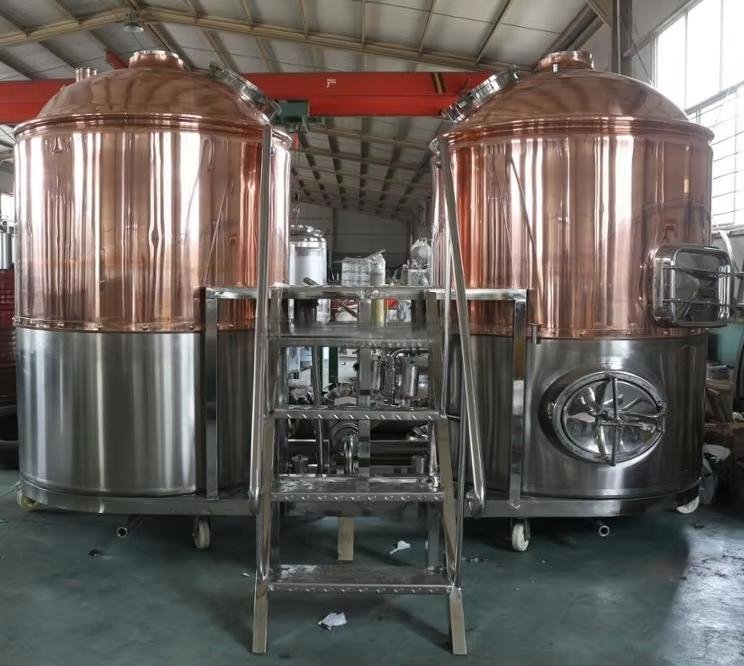
At this point, it’s worth noting that brewing beer is a process that demands high standards in equipment, process control, and raw material management. Our equipment is designed to minimize beer’s exposure to oxygen, and we offer excellent value for money. Every member of our team is dedicated and reliable, committed to providing customers with durable, stable products. When you purchase our equipment, we also provide classic beer recipes and raw material sourcing channels – helping you control quality from the very start and brew more consistent, outstanding beer.
-300x83.png)