
A lot of bar owners or small brewery starters think brewing is complicated. But honestly, with reliable equipment and proper practices, making great beer isn’t that hard. Let’s go over the key points you really need to watch out for when using homebrew equipment.
- Your fermenter must be completely airtight
The fermenter is where the wort and yeast do their job. It needs to be 100% airtight. If it’s not, wild bacteria can get in and ruin the whole batch. We recommend stainless steel tanks with smooth welds and tight-fitting connections — they’re also easier to clean. Fermentation produces a lot of CO₂, so you need an airlock (a one-way valve) on top to let gas escape without letting outside air in. This small part may not look like much, but it’s critical for success.
- Temperature control is the #1 key
Beer fermentation is very sensitive to temperature. Ales usually need around 18–23°C, while lagers need cooler temps (8–12°C). If it’s too hot, yeast will stop working or even die, creating off-flavors. Too cold, and fermentation slows way down. So the accuracy and stability of your temperature control system directly decide how good your beer tastes. As many experienced brewers say: “Brewing is all about managing temperature.” That’s the truth.
- Don’t cut corners on cleaning and sanitation
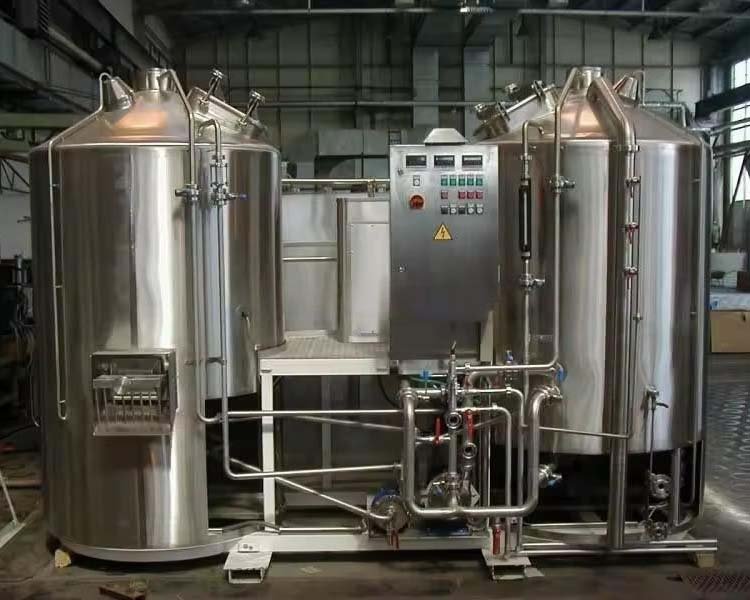
Anyone who’s used brewing gear knows: the hardest part isn’t brewing — it’s cleaning the tanks. Any leftover yeast or hops in pipes, valves, or tank walls can cause contamination in the next batch. So when you buy equipment, check how smooth the polishing is and whether there are any sanitary dead spots. Our equipment has mirror-polished welds and rounded corners, so you can rinse it clean easily — saving you time and effort.
- Don’t skip gravity measurements
Specific gravity basically tells you how much sugar has turned into alcohol. Use a hydrometer — measure the original gravity of the wort before fermentation, then measure the final gravity after fermentation. A quick calculation gives you the ABV. It’s simple: use a siphon to take a sample from the middle of the fermenter (not the bottom — that’s where the settled dead yeast is). Record the numbers. Don’t skip it — it’s a good habit for batch consistency.
- Build quality determines your after-sales costs
Many beginners go cheap — thin walls, rough welds. Then six months later, they’ve got leaks or a broken temperature controller, and the repair costs nearly as much as a new machine. We always say: you buy equipment to help you make money, not to turn you into a repairman. Full-gauge stainless steel, proper welds, reliable parts — it looks professional and gives you peace of mind.
If you have any questions about specific models, configurations, or operating details of homebrew equipment, feel free to contact us. We specialize in exporting to Europe, the US, the Middle East, Africa, Southeast Asia, and beyond — all our equipment is built to international standards, and we provide full support from installation to recipes.
-300x83.png)