
When brewing craft beer with brewing equipment, the fermentation process follows the mashing process, with the wort typically staying in the fermentation tank for 12 to 15 days. You probably know that the tank needs to be sealed during fermentation, but does everyone know the real reason for sealing the fermentation tank?
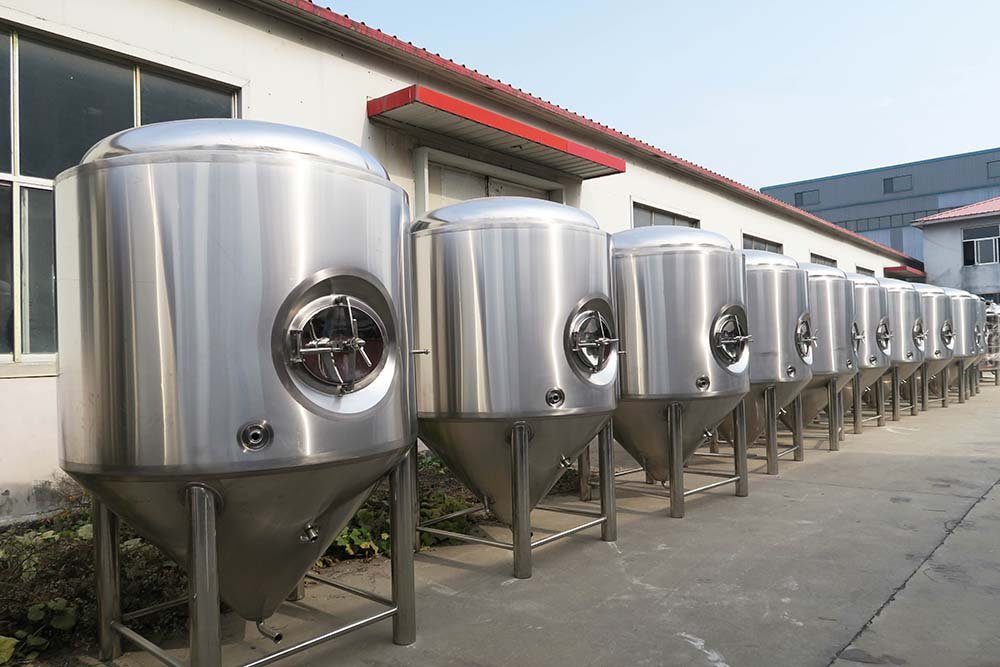
The stainless steel fermentation system mainly consists of the fermentation tank, wort oxygenation device, and fermentation piping valves. Let’s briefly introduce the features of the fermentation tank: the inner shell and outer shell are made of SUS304 stainless steel plate, with a dished stainless steel head. The interior can be thoroughly cleaned, with polyurethane insulation layer, a 60° lower cone pressure-resistant design, a top sight glass, food-grade stainless steel piping, and no dead corners for contamination. The number of fermentation tanks is typically 6 to 12. These design details directly affect the stability and sealing effectiveness during fermentation—and this is precisely the foundation for long-term reliable operation of the equipment.
The fermentation process is divided into two stages: open fermentation and sealed fermentation. After the wort is transferred into the fermentation tank, it undergoes open natural fermentation with the exhaust valve open. The purpose is to expel undesirable volatile gases and raw beer odors. After a period of fermentation, when the sugar content reaches the required level, the exhaust valve is closed to seal the tank. The purpose of sealing is to promote the production of alcohol.
When sealing the tank, several key points require special attention:
(1) The sealing valve should be kept clean. Before sealing the tank, sterilize with 75% alcohol to avoid bacterial contamination.
(2) The timing of sealing must be carefully controlled. Sealing too early causes the pressure inside the tank to rise too quickly, resulting in inadequate removal of raw beer odors; sealing too late causes the pressure to rise too slowly, making it difficult to achieve the required tank pressure. Mastering this timing requires both experience and equipment that can precisely respond to operational commands.
(3) Regularly inspect valves, pressure gauge connections, and other areas to prevent air leaks.
(4) After sealing, to check for leaks, apply a foaming liquid around the tank opening, connections, valves, and other areas. If bubbles appear, it indicates improper sealing or air leakage—prompt inspection and repair are needed.
Fermentation is mainly divided into top fermentation and bottom fermentation, with differences in process parameters between the two:
Parameter | Top Fermentation | Bottom Fermentation |
Inoculation Temperature | 14–16°C | 5–7°C |
Yeast Addition Rate | 0.15–0.30% | 0.4–0.6% |
Yeast Multiplication Time | 8–16 hours | About 20 hours |
Maximum Primary Fermentation Temperature | 18–20°C | 7.5–9°C |
Primary Fermentation Time | 4–6 days | 7–8 days |
The precise execution of these technical parameters relies on equipment stability and the operator’s understanding of the process. Our company is located in the birthplace of China’s brewing equipment industry, surrounded by a rich industrial ecosystem. From tank fabrication to valves and piping, every component is manufactured within a mature industrial system, ensuring sealing integrity, temperature control precision, and long-term operational reliability. We offer first-class brewing technology, a dedicated and reliable team, and high cost-performance equipment. From equipment delivery to ongoing process guidance during daily use, we provide our customers with solid support, ensuring true peace of mind after the sale.
-300x83.png)