
I. Concept of Mashing
Mashing is the process of utilizing various hydrolytic enzymes present in malt (or added exogenous enzymes) under suitable conditions (temperature, pH, time) to gradually break down insoluble high-molecular substances in the malt and adjuncts into soluble low-molecular substances.
II. Purpose and Requirements of Mashing
The purpose of mashing is to create favorable conditions for enzyme activity, allowing insoluble substances to dissolve, thereby obtaining as much soluble extract as possible while ensuring a suitable wort composition.
III. Main Material Changes During Mashing
During mashing, the key material conversions include: starch degradation, protein degradation, β-glucan degradation, along with other transformations.
(1) Starch Degradation
Starch degradation is the most critical enzymatic reaction in mashing. The main influencing factors include temperature, time, pH, mash concentration, and the stabilizing effect of calcium ions. The breakdown products include maltose, dextrins, and other intermediate compounds.
(2) Protein Degradation
Under the action of proteases, proteins are sequentially broken down into high-molecular nitrogen, medium-molecular nitrogen, low-molecular nitrogen, and ultimately into amino acids. These degradation products serve not only as yeast nutrients but also influence beer flavor, foam, and non-biological stability.
(3) β-Glucan Degradation
β-glucans play a significant role in beer brewing. On one hand, an appropriate amount of β-glucans contributes to beer body and foam performance; on the other hand, excessive β-glucans can cause difficulties in wort and beer filtration.
(4) Phosphate Degradation
During mashing, phosphatases can dissolve a portion of insoluble organic phosphates in the malt, thereby increasing the buffering capacity of the mash.
(5) Polyphenol Degradation
As mashing time extends and temperature rises, polyphenols released from the malt husk and endosperm can affect beer quality.
(6) Lipid Degradation
Lipids can affect beer foam performance, with medium-chain fatty acids being particularly detrimental to foam stability.
(7) Zinc Release During Mashing
Trace amounts of zinc in malt are released into the wort during mashing. Zinc plays an important physiological role in yeast metabolism.
IV. Mashing Methods
(1) Infusion Mashing
Infusion mashing is characterized by the mash never being boiled throughout the process, relying solely on enzymatic action to extract various substances, with some enzyme activity retained in the wort before boiling.
(2) Decoction Mashing
Decoction mashing involves heating a portion of the mash to boiling in stages, then mixing it back with the unboiled mash. This allows the entire mash to reach the temperatures required for different enzyme activities step by step, ultimately reaching the final mashing temperature.
(3) Comparison Between Infusion and Decoction Mashing Methods
Both methods have their suitable applications. Infusion mashing is relatively simpler to operate, while decoction mashing offers advantages in process control and adaptability to different raw materials.
V. Mashing Equipment Operation
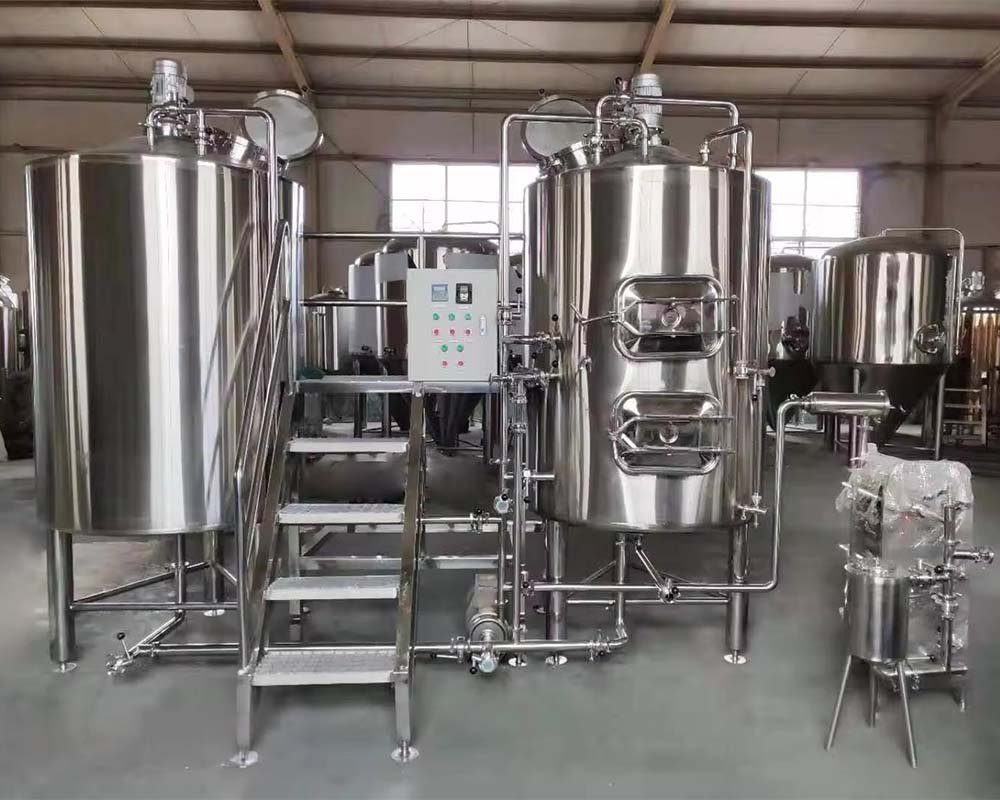
(1) Equipment Inspection: Check the brew kettle, lauter tun (in smaller systems, mashing and boiling are combined in one vessel), piping, valves, instruments, and the supply of water, electricity, and steam to ensure normal operation. After confirming no abnormalities, clean thoroughly and prepare for mashing.
(2) Preparing Strike Water: Add 500L of tap water to the brew kettle and begin heating. During electric heating, run the vortex valve and wort pump for 3–5 minutes to ensure even temperature distribution. Heat to 68°C, then stop heating. Open the relevant valves, start the wort pump, and transfer 275L of strike water into the lauter tun from the bottom.
(3) Mashing-in at 55°C (Protein Rest): Start the lauter tun mixer, add the barley malt grist into the lauter tun, mix thoroughly, stop the mixer, and begin timing. For wheat beer, add barley malt first, mix well, then add wheat malt and mix again. Maintain temperature at 55±1°C for 70 minutes.
(4) Preparing Sparge Water: Continue adding water to the brew kettle until reaching 350kg, heat to 100°C, then stop heating. Open the relevant valves and prepare to start the wort pump for adding sparge water.
(5) Adding Sparge Water at 66°C (Starch Saccharification): Stir up the mash in the lauter tun, then pump the 100°C hot water from the bottom of the lauter tun while continuing to stir until the temperature reaches 66°C. For dark beer, after reaching the target temperature, add roasted malt and black malt grist, mix thoroughly (3–5 minutes). Maintain 66°C for 80 minutes.
(6) Piping Sterilization: Connect the wort piping to form a loop with the brew kettle, start the wort pump and circulate hot water for 20 minutes (water temperature not below 80°C). Then connect the flexible hose to the fermentation tank inlet (the fermentation tank inlet should be sterilized with alcohol beforehand).
From the control of material conversions to the precise management of temperature points, every step depends on the stability of the equipment and the accuracy of operations. Our company is located in the birthplace of China’s brewing equipment industry, surrounded by a mature industrial ecosystem. From equipment manufacturing to on-site commissioning, we provide solid support to our customers. We offer first-class brewing technology, a dedicated and reliable team, and high cost-performance equipment. For critical processes like mashing, we focus on ensuring precise temperature control, smooth operation, and reliable process execution. Whether it’s the equipment itself, installation and commissioning, or process guidance, we do our best to help our customers minimize concerns, produce quality beer, and enjoy true peace of mind with after-sales support.
-300x83.png)