
A good brew, a story to tell. Today, let’s talk about the maintenance details for craft beer equipment.
A complete brewing system, much like people, needs proper care and attention. Many breweries overseas dedicate two months each year to carefully maintain and service their equipment. Treat it well, and it will run steadily and efficiently for you; neglect it, and its “temper” can cause more than just downtime.
Below is a systematic and practical maintenance guide, covering both general usage precautions and steam boiler care.
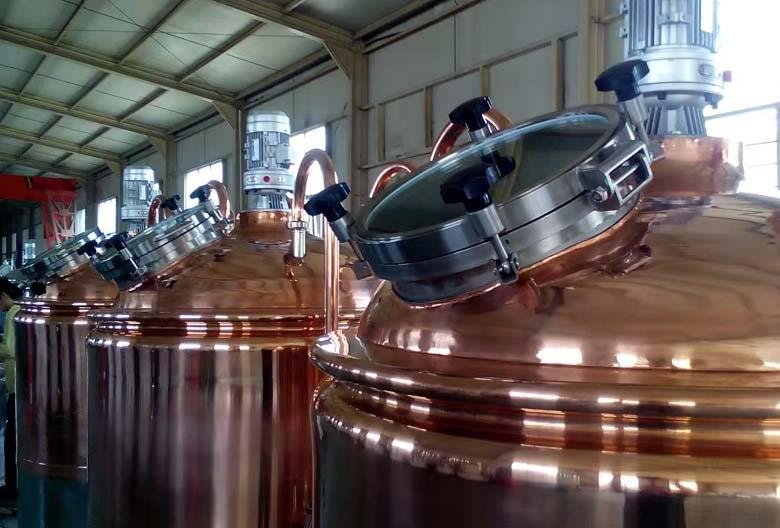
- General Usage Precautions for Craft Beer Equipment
- Choice of cleaning agents: Do not use detergents or disinfectants containing chloride ions (Cl⁻), as they can corrode stainless steel surfaces.
- Long-term shutdown and restart:
- If the equipment is to be idle for an extended period, thoroughly clean it before shutdown, drain all water, and close all valves.
- Before restarting after prolonged inactivity, perform a thorough cleaning, repeating several times if necessary.
- Plate heat exchanger care:
- After extended operation or long periods of disuse, disassemble and clean the heat exchanger.
- Do not use metal brushes, and avoid bending, twisting, stepping on, or squeezing the plates.
- Replace aging gaskets promptly.
- Motors, pumps, and drive components:
- Regularly check wiring and grounding of motors and pumps to ensure correct connections.
- Check oil levels in geared motors and hydraulic units; lubricate mixing motors per the manual.
- Periodically inspect fastenings of mixing paddles, raking blades, and other connections.
- Pumps must not run dry or in reverse; replace seals immediately if leaks are found.
- Mill maintenance:
- Frequently inspect the feed hopper for foreign objects.
- Check all fastenings, drive belt tension, and the reliability of safety guards.
- Clean mill rollers regularly.
- Steam heating equipment:
- Regularly check pressure gauges and safety valves; ensure steam traps are clear.
- Do not start heating unless the liquid level is within specified limits.
- During operation, post warning signs on hot piping (steam, wort) and above the brew house to prevent burns.
- Lautering operations:
- Do not draw wort at excessive flow rates to avoid damaging the sieve plates.
- When not in use, do not place heavy objects on the sieve plates to prevent distortion.
- Ensure all mechanical parts run smoothly during operation.
- Plate heat exchanger inspection: Frequently check for leaks, weeping, or cross-contamination; repair immediately if detected.
- Caustic solution monitoring: Replace caustic solution in the caustic tank if concentration is too low or if the solution becomes excessively turbid.
- Piping and valve checks: Regularly inspect all valves and pipe joints; repair or replace leaking components without delay.
- Control panel calibration: Periodically verify readings on the panel; calibrate digital temperature controllers using a mercury (or alcohol) thermometer to ensure accuracy.
- Post-use cleaning: After each brew session, rinse the mash tun, piping, plate heat exchanger, and wort lines thoroughly with water.
- Safety: Never climb on or grasp process piping, cooling lines, or exhaust pipes.
- Shutdown for maintenance: When the equipment is down for servicing, cut off power and steam, and post clear warning signs.
- Steam Boiler Maintenance Points
- Water quality: Feed water must be properly softened and meet quality standards. Always disconnect power and release pressure before servicing the boiler.
- Daily blowdown: Blow down the boiler every day after use to keep the water clean.
- Key component checks: Regularly inspect power cables, feed pumps, control panels, pressure switches, and safety valves. Investigate and repair any anomalies.
- Periodic descaling: Clean and descale the boiler internally every six months to one year to maintain efficiency and prolong service life.
- Water gauge maintenance: Keep the water gauge clean; flush it daily for clear visibility.
- Safety valve exercise: Manually open the safety valve lever once daily to prevent seizing.
- Long-term shutdown: When the boiler is out of service for an extended time, cut power and drain all water from the boiler and piping to prevent freezing and rusting.
- Fastener tightening: Regularly tighten heating element connections and flange nuts.
- Control panel care: Use “listening, smelling, looking, and feeling” to inspect the control panel. Cut power and repair immediately if abnormalities are found.
- Heating element descaling: Elements are prone to scaling, especially with hard water. Remove and descale them every six months or so. When reinstalling, ensure wiring is correct and flange nuts are tightened evenly to prevent leaks.
- Electrical connections: When the boiler is idle, cut power, open the control panel, and check all electrical connections (breakers, contactors, etc.). Tighten loose nuts to prevent arcing and burnt wires.
- Control box protection: Keep the control box free from water, steam, and flammable gases. Keep the door closed during boiler operation.
- Salt for water softener: Use crystalline coarse salt with a purity of at least 99.5%. Do not use fine salt, and ensure salt crystals are present.
- Water softener operating conditions: The softener operates at water temperatures of 5–45°C and pressures of 0.15–0.6 MPa. Typical settings: 10 m³ capacity, 10 min backwash, 60 min slow rinse, 5 min brine refill, 10 min fast rinse, then normal service.
Proper operation and diligent maintenance are essential for reliable equipment performance. Following these guidelines will not only extend the lifespan of your equipment but also ensure consistent beer quality batch after batch. We hope this guide proves helpful.
-300x83.png)