
Hi everyone, I’m Mike from Wellington, New Zealand. My craft beer pub is on an old street in the city center, and business is doing pretty well.
But what you don’t know is that when I first started out, I made some costly mistakes with my equipment.
Back then, I knew nothing. I looked at all sorts of equipment online, with prices ranging from a few thousand to tens of thousands of dollars, and had no idea how to choose. I thought to myself, it’s just a few tanks—how much difference can there really be?
The result? The first system I bought started having problems within a year—rust spots on the tanks, poor insulation, sky‑high electricity bills, and valves that constantly leaked. When I contacted the manufacturer, they made excuses. During that time, I spent more time fixing equipment than brewing.
Then I found my current partner, Zorime. They’re based in Jinan, the birthplace of China’s craft brewing equipment industry. Backed by the Shandong Academy of Sciences, their brewing technology is among the best in the country.
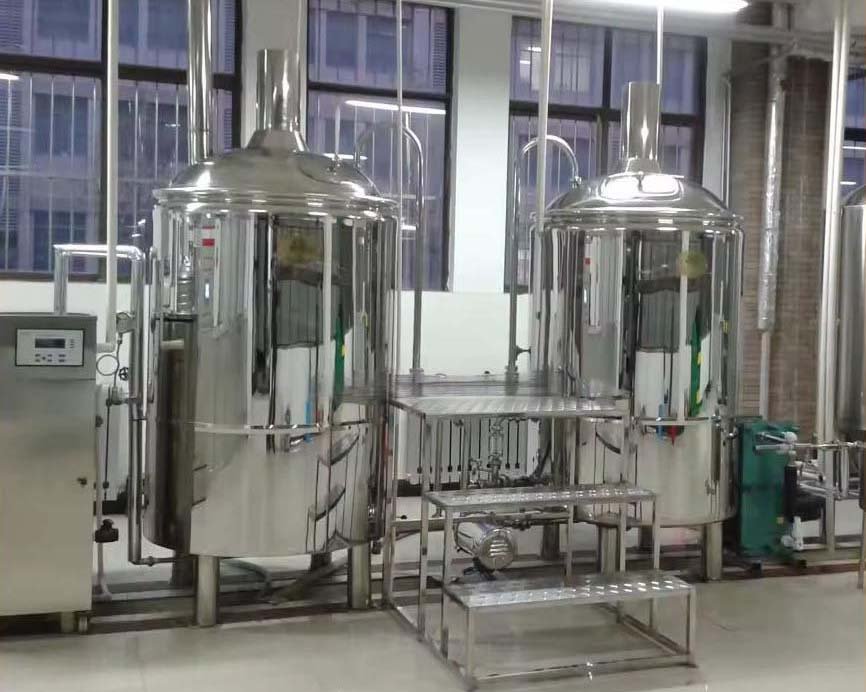
Today, I want to use the lessons I learned the hard way to talk about the details that really matter when choosing equipment.
Lesson One: Material Quality – Never Cut Corners Here
My first system, the manufacturer told me it was 304 stainless steel. A few months later, rust spots started appearing along the welds. A friend who knows the industry took one look and said it was 201 stainless steel being passed off as 304.
The price difference between 201 and 304 is about 20%. But the real problem with 201? It’s difficult to weld, prone to rust, and has poor pressure resistance. During fermentation, there’s pressure inside the tanks. If the material isn’t up to standard, it’s not just a quality issue—it’s a safety risk.
When Zorime first talked with me, they showed me material certificates right away. “Every batch of our 304 stainless steel comes with mill certificates,” they said. “You can verify the thickness and material anytime.”
One of their engineers said something I’ve never forgotten: “The lifespan of your equipment is decided the day you choose the materials.”
Lesson Two: Polishing – Look Inside and Out
A lot of people only care about how shiny the outside of the equipment is. But what about the inside?
With my first system, the outside looked decent, but the inside was rough, with unfinished welds. The result? Dirt and bacteria built up in those rough spots, and no matter how I cleaned, I kept getting off‑flavors in my beer.
Zorime’s equipment is polished inside and out to a smoothness of 0.4 microns—it feels like a mirror. No dead ends, no hiding spots for contamination. One CIP cycle and it’s completely clean.
They also taught me a way to judge quality: Good equipment uses 304 or higher for both the inner tank and the outer shell, with polishing on both. Decent equipment has a 304 inner tank but a lower‑grade outer shell. The worst quality? The inner tank isn’t even 304. These are the kinds of details manufacturers won’t tell you if you don’t ask.
Lesson Three: Insulation – What You Can’t See Matters Most
With my first system, the fermenters felt warm to the touch in summer. When I asked the manufacturer about it, they said it was normal. The result? My electricity bills were shockingly high every month.
Zorime explained that good fermenters use polyurethane insulation, with a thickness of at least 80 millimeters. That’s what keeps the temperature stable between the inside and outside. Poor insulation doesn’t just waste electricity—it causes temperature fluctuations during fermentation, which affects the beer’s flavor.
I’ve been using my current system for over two years, and my electricity bills are 30% lower than with the old one. That’s money I save every single month.
Lesson Four: Auxiliary Equipment – Don’t Save Money in the Wrong Place
Mills, chillers, control systems, cleaning systems… a lot of people try to save money by buying cheap auxiliary equipment. I made that mistake with my first system—the chiller was underpowered, couldn’t keep temperatures down in summer, and my beer quality suffered.
Zorime paired my system with auxiliary equipment from well‑known brands. Their engineer said, “These are the heart of your brewery. You can’t afford to cut corners here.”
The same goes for valves and fittings. They might seem like small parts, but one leaking valve can ruin an entire batch. Zorime uses only 304 or higher. They feel solid, operate smoothly, and I haven’t had a single issue in two years.
Lesson Five: Welding – It Determines How Smoothly Your Brewery Runs
My first system had rough welds, some even with slag left on them. Later I learned that was single‑sided welding—it saves about half the labor cost, but the quality is completely different.
Zorime uses double‑sided argon arc welding. The welds are smooth and consistent, inside and out. Their engineer told me, “Good welding means no leaks and easy cleaning. This isn’t a place to cut costs.”
Lesson Six: Choosing Equipment Means Choosing Your Partner – Don’t Just Look at Price
The reason I chose Zorime in the end wasn’t just because their equipment is good—it’s because their people are reliable.
They handled installation at no extra charge. During the warranty period, any issue I had, they responded right away. They also taught me the full brewing process—from ingredient ratios to fermentation control, from equipment operation to cleaning procedures. Everything, clearly explained.
Their team is down‑to‑earth and honest. They never pushed me to buy things I didn’t need. They told me, “If your business does well, we get to work together for the long run.”
I still remember those words.
Final Thoughts
If you’re choosing equipment, here’s my advice:
Don’t focus only on price. Ask about materials. Check the polishing. Verify insulation thickness. Inspect welding quality. If you can visit the factory in person, do it. Seeing is believing.
When I visited Zorime’s factory and saw their production line and quality testing processes, that’s when I felt completely confident. Their location—Jinan—is the birthplace of China’s brewing equipment industry, with mature supply chains and world‑class technology. With the backing of the Shandong Academy of Sciences, their brewing expertise is among the best in the country.
Value for money isn’t about cutting corners. It’s about using proven technology and a reliable team to give you lasting peace of mind at a fair price.
If you want to talk about choosing the right equipment, reach out to my Chinese friends. I know they’ll listen to your needs just as carefully as they listened to mine.
-300x83.png)