
Depending on the different components of hops, there are five main ways hop compounds are introduced into beer:
The first pathway involves bitter substances such as alpha-acids. During high-temperature boiling of the wort, alpha-acids are isomerized into iso-alpha-acids, which is the primary source of bitterness in beer. In addition to bitterness, this process also yields a small amount of cooked hop aroma.
The second pathway is through the addition of various aroma hops during the middle of the boil. The main purpose here is to extract hop aroma compounds, such as the classic citrus, lemon, lychee, or mango notes. The flavor differences between hop varieties often come through most fully at this stage.
The third pathway is “late addition”—adding hops in the last 0 to 5 minutes of the boil or during the whirlpool process. The goal is primarily to capture hop oils while also obtaining a small amount of bitterness, preserving as much of the delicate, volatile hop aromas as possible.
The fourth pathway comes from hop precursors. The bracts of hops contain certain aroma precursors, which are utilized and cleaved by yeast during fermentation to produce aromatic compounds. This type of aroma release is relatively gentle and often brings more subtle, layered hop character to the beer.
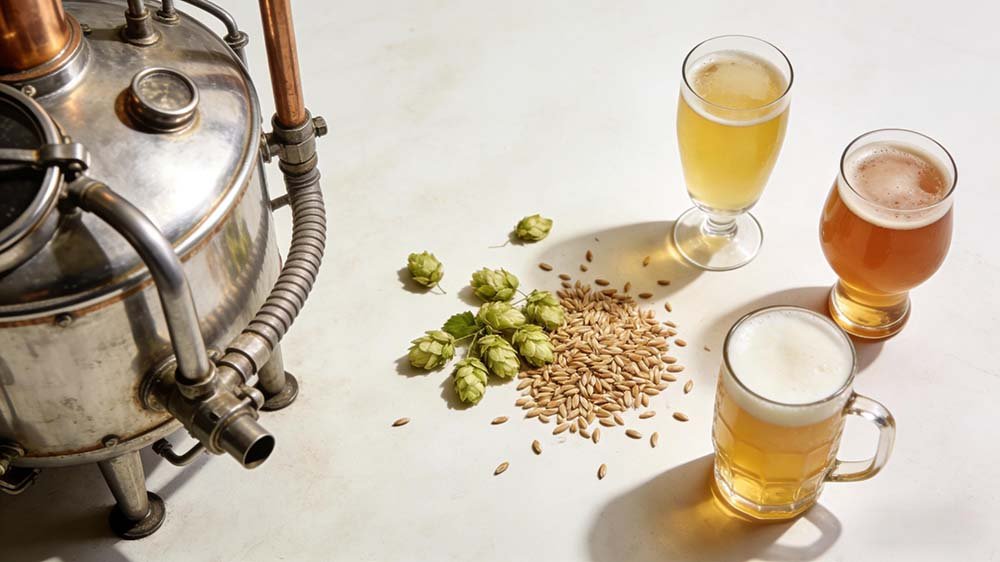
Speaking of which, it’s worth noting that some brewers add hops during the first wort collection stage—a practice also used in commercial breweries. There are two purposes: first, adding hop pellets during wort collection allows them to heat up and begin isomerizing alpha-acids earlier, effectively extending the boil time and improving bittering efficiency; second, it helps extract more aroma precursors. Generally speaking, European-style hop varieties such as Czech Saaz or American Willamette contain higher levels of aroma precursors in their bracts. Adding them during first wort collection often yields better aroma expression than adding them just before the end of the boil.
The fifth pathway is dry hopping—adding hops during fermentation or aging to obtain fresh, intense raw hop aromas. Since no heat is involved, this method maximizes the retention of those highly expressive volatile hop compounds.
The timing, method, and combination of hop additions directly affect the flavor profile and final quality of the beer. Our company has long been at the forefront of brewing technology in China, with a dedicated and reliable team. From recipe design to process execution, we provide professional support to our customers. Located in the birthplace of China’s brewing equipment industry, the mature industrial ecosystem around us gives us a solid foundation in equipment reliability and process control. When customers face questions about temperature management, addition timing, or equipment response during brewing, we are ready with solutions.
Cost-effectiveness is not simply about low price—it’s about delivering equipment that precisely executes your process, ensuring that every hop addition performs as intended, at a reasonable investment. The industrial ecosystem around us also provides a natural advantage in spare parts supply and after-sales support, allowing our customers to focus on brewing great beer with fewer worries.
-300x83.png)